
📑 Table of Contents ▶
Homemade Fresh Pasta
When I first decided to make homemade fresh pasta, I thought it would be an ambitious challenge, meant only for experts in the kitchen. I vividly remember the first batch I created, flour dusting my countertop and dough clinging to my fingers. With every knead and fold, I felt a connection to generations of cooks who transformed simple ingredients into memorable meals.
This journey into the world of homemade fresh pasta taught me that with just a few basic components, I could create something truly special. Whether it’s a quick weeknight dinner or an elaborate meal, fresh pasta never fails to impress. The joy of preparing, rolling, and shaping this staple is incredibly rewarding.
Homemade fresh pasta doesn’t just carry me back to those initial kitchen experiments; it continues to invite creativity and passion into my cooking. The easy-to-follow recipe I now share enables anyone to enjoy the satisfying experience of crafting pasta from scratch. So let’s dive in and explore how to create delightful homemade fresh pasta right in your kitchen.
Making Fresh Pasta
Fundamentals
Homemade fresh pasta starts with a solid foundation of key ingredients. The primary component is flour, and you can choose between flour 00 or all-purpose flour. Both types work beautifully, giving you that tender and chewy texture essential for great pasta.
The choice of eggs matters too. Using three extra-large eggs adds richness and helps bind the ingredients together. Olive oil introduces moisture, ensuring a smooth and manageable dough. Lastly, salt serves as an important seasoning, enhancing the overall flavour of the pasta.
Preparation/setup
To create your homemade fresh pasta successfully, begin by clearing a clean surface in your kitchen. This will be your workspace where the magic happens. Next, measure out your flour carefully, ensuring you have the precise amount needed for this recipe.
Make a well in the centre of the flour and crack open your eggs right into it. Drizzle the olive oil and sprinkle the salt into this well. It may seem odd at first, but this technique allows the liquids to blend gradually with the flour, minimizing mess and maximizing efficiency.
Ingredients
- 2 cups flour 00 or all-purpose flour
- 3 extra-large eggs
- 2 tablespoons olive oil
- 1/2 teaspoon salt
Gather all your ingredients on the countertop for easy access. The simplicity of the ingredients belies the phenomenal transformation they’ll undergo once mixed and kneaded together.
Directions
Start by using a fork to mix the eggs, olive oil, and salt in the well. Gradually incorporate the flour, beginning with the inner rim of the well, until a dough begins to form. Once you have a shaggy mass, transition to kneading the dough by hand.
Kneading your dough for about 5 to 10 minutes develops the gluten, creating that desirable structure. If at any point it feels sticky, add a pinch of flour. Aim for a smooth and elastic consistency that should hold together well when formed into a ball.
Once your dough is ready, place it in a lightly floured bowl and cover it with a lid or cloth. Let it rest for at least 30 minutes, allowing the gluten to relax which makes rolling out easier later on.
After resting, divide the dough into four portions to manage it more easily. Roll out one portion into a rectangle shape, checking for stickiness as you go. The goal here is to achieve a thin sheet of pasta, enabling it to cook evenly and soak up all your delicious sauces.
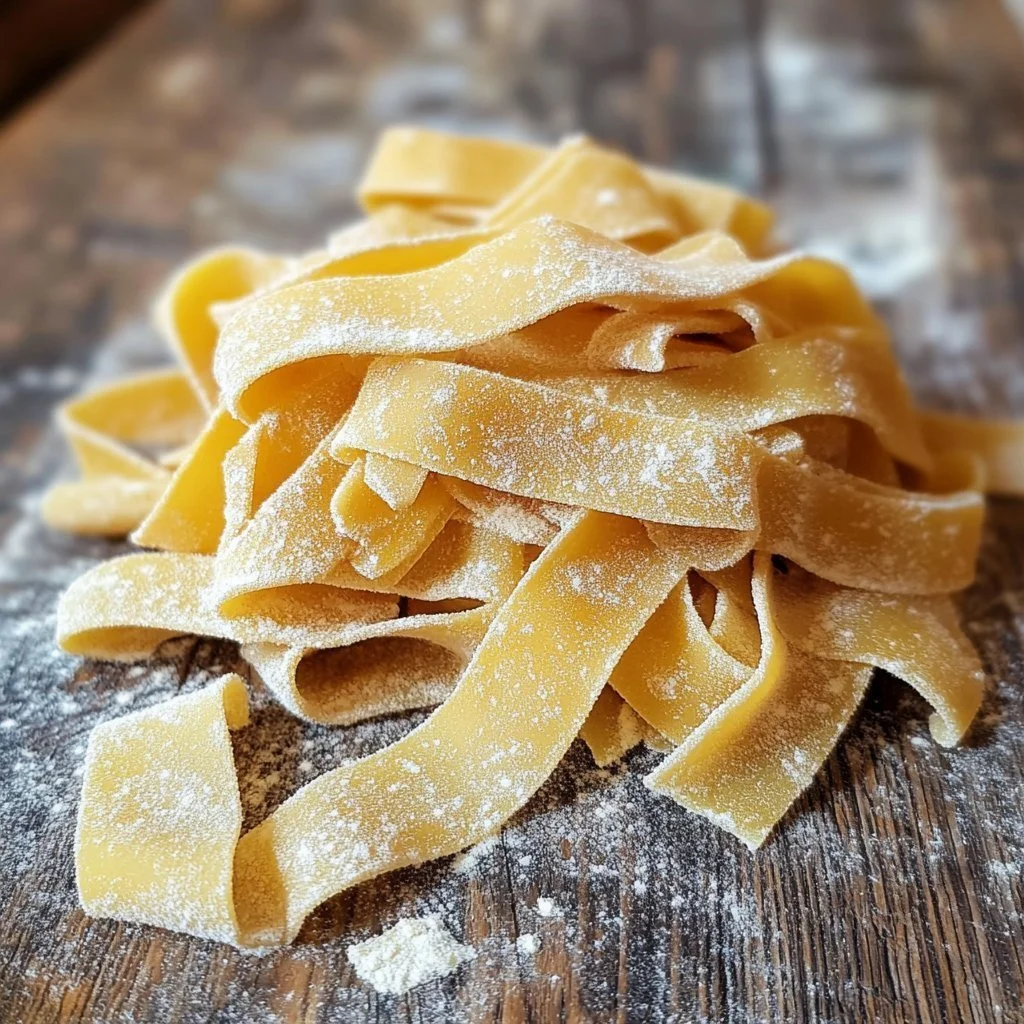
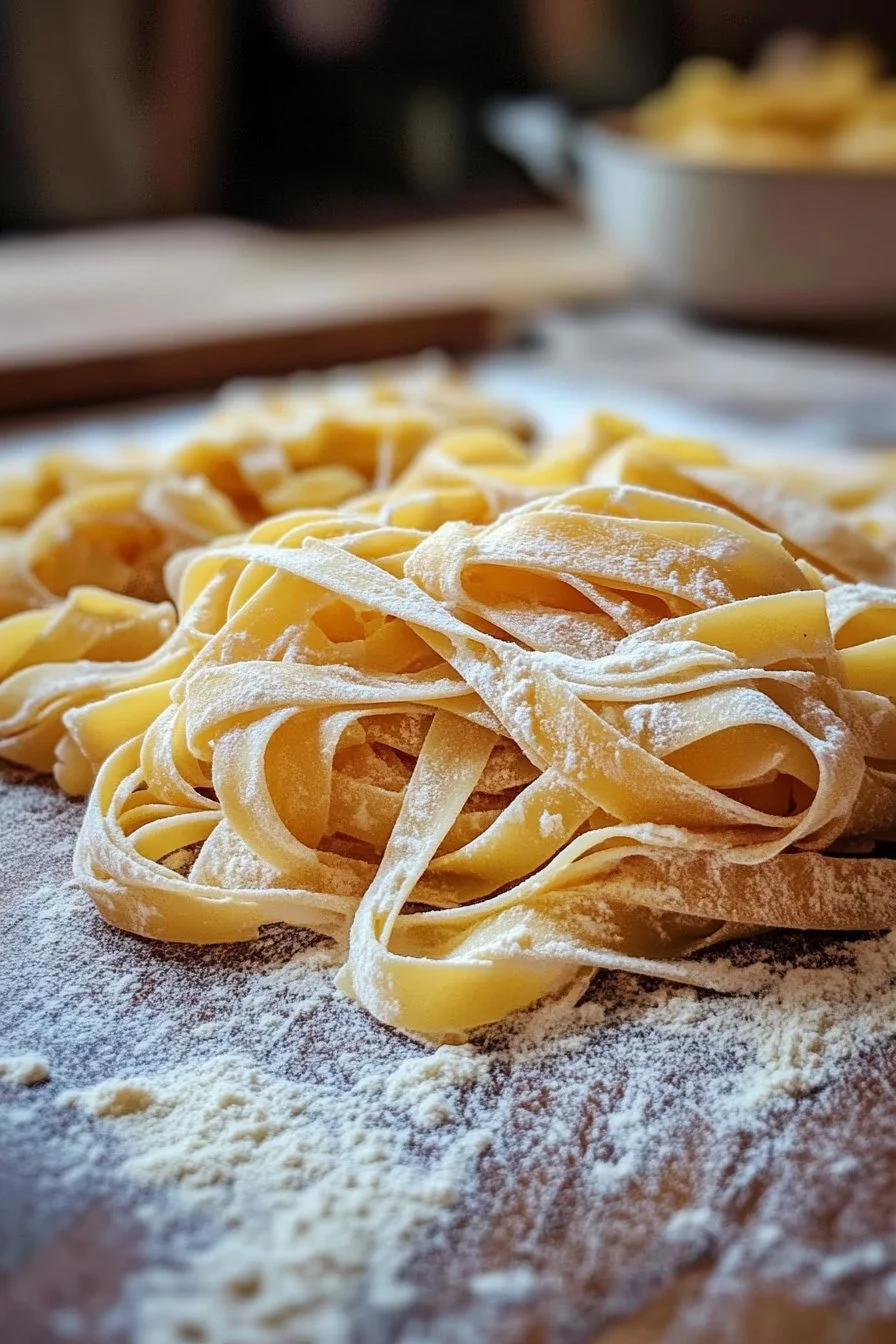
Fold the rolled dough into layers before cutting it into your desired pasta shapes—be it wider strips for fettuccine or thinner slices for tagliatelle.
To cook your freshly cut pasta, bring a large pot of salted water to a boil. Add the pasta and cook until it floats, which signifies it’s ready. Enjoy the exhilarating experience of homemade fresh pasta, bringing comfort and love to your family meals.
Perfecting the Technique
Technique
As you gain confidence in making homemade fresh pasta, focus on perfecting your technique. Each step in the process is an opportunity to refine your craft. Pay attention to your dough’s consistency, ensuring it’s neither too dry nor too sticky.
While rolling out your dough, use an even pressure to avoid tearing. If you notice any rough edges, simply trim them with a sharp knife or pastry cutter to create uniform shapes.
Tips/tricks
Start with a light dusting of flour on your work surface and the rolling pin to prevent sticking. If you encounter any stubborn bits, a sprinkle of flour can work wonders. When cutting your pasta, it’s helpful to cut a larger batch at once for future meals.
As you develop your skills, don’t shy away from experimenting with various pasta shapes. From ravioli to lasagna sheets, each offers a unique cooking method and can transform your dishes entirely.
Troubleshooting and Variations
Perfecting results
Every cook faces challenges, and homemade fresh pasta is no exception. If your dough is difficult to knead or feels overly tough, it may need more moisture. A drop of olive oil or even a bit of water can help to create a silkier texture.
On the other hand, if your pasta becomes soggy while cooking, it likely indicates overcooking. Keep a close watch on your pasta in boiling water, watching for that tell-tale float!
Troubleshooting/variations
If you want to change things up, consider adding herbs or spices to your dough for added flavour. A touch of semolina flour mixed into the dough can also give a satisfying texture.
Keep in mind that the thickness of your pasta directly affects cooking time. Thin sheets will cook rapidly, while thicker ones may require additional minutes in the boiling water.
Serving and Presentation
Serving/presentation
How you serve your homemade fresh pasta can elevate your meal from ordinary to extraordinary. After cooking, it’s best to toss the pasta with a drizzle of olive oil or a light sauce to prevent sticking.
For a rustic presentation, serve your pasta on a large platter, garnished with fresh herbs or grated cheese. The visual appeal of fresh pasta, especially shaped by hand, adds charm to any dinner table.
Pairings/storage
While many sauces complement fresh pasta beautifully, a light garlic and olive oil sauce or a classic tomato sauce enhances its flavours without overshadowing the dish. You can store any leftover pasta in an airtight container in the fridge for up to five days.
To preserve freshness, consider freezing the uncooked shapes in a single layer on a baking sheet before transferring them to a freezer bag. This way, they maintain their delightful texture and flavour for future meals.
Conclusion
Homemade fresh pasta combines simplicity with endless possibilities. By starting with high-quality ingredients and immersing yourself in the process, you’ll discover a satisfying and enriching experience. Enjoy sharing this delightful creation with family and friends, making mealtimes more meaningful and full of love.
Homemade Fresh Pasta
Ingredients
Method
- Clear a clean surface in your kitchen to serve as your workspace.
- Measure out your flour and make a well in the center.
- Crack the eggs into the well, drizzle olive oil, and sprinkle salt.
- Use a fork to mix the eggs, olive oil, and salt, gradually incorporating the flour from the inner rim of the well.
- Once a dough begins to form, knead it by hand for about 5 to 10 minutes until smooth and elastic.
- If the dough feels sticky, add a pinch of flour as needed.
- Place the kneaded dough in a lightly floured bowl and cover it. Let it rest for at least 30 minutes.
- After resting, divide the dough into four portions.
- Roll out one portion into a thin rectangular sheet.
- Fold the rolled dough into layers before cutting it into your desired pasta shapes.
- Bring a large pot of salted water to a boil and cook the pasta until it floats, indicating it's ready.