
📑 Table of Contents ▶
- The Essence of Slow Cooker Korean Beef
- Fundamentals
- Preparation/Setup
- Directions
- Mastering the Technique Behind Slow Cooker Korean Beef
- Technique
- Tips and Tricks
- Perfecting Your Slow Cooker Korean Beef
- Perfecting Results
- Troubleshooting and Variations
- Serving and Storing Your Slow Cooker Korean Beef
- Serving and Presentation
- Pairings and Storage
- Ingredients
- Method
Slow Cooker Korean Beef
Welcome to Eatimi! I’m Olivia Hart—a home cook who believes delicious food doesn’t need complicated techniques. Here I share easy everyday recipes, family meals, quick ideas for busy days, and helpful kitchen tips to make cooking simple and fun. My goal is to help you feel confident in the kitchen and enjoy homemade food with joy, comfort, and love. 💛
Slow cooker Korean beef holds a special place in my heart. Growing up, my family often gathered around the dinner table, sharing stories over wholesome meals. The aroma of this dish brings back memories of those warm evenings. The tender beef melts in your mouth, infused with the savoury sweetness of soy sauce and brown sugar. Every bite transports me back to cherished moments spent with loved ones.
Creating slow cooker Korean beef is a breeze, perfect for busy days when you want to come home to a delicious meal. Just throw the ingredients into your slow cooker, and let it work its magic. This dish is all about simplicity, savouring each flavour, and enjoying the rich combination without fuss. Dive into this recipe, and you’ll see just how comforting slow cooker Korean beef can be.
The Essence of Slow Cooker Korean Beef
Fundamentals
Understanding the foundation of slow cooker Korean beef simplifies the cooking process. The core flavours come from a perfect blend of soy sauce, brown sugar, garlic, and ginger. Each ingredient plays a role in achieving that signature taste. Soy sauce adds saltiness, while brown sugar brings essential sweetness. Garlic and ginger elevate the dish with their distinct notes, creating a well-rounded flavour profile.
The beauty of slow cooking lies in its ability to transform tough cuts of meat into tender masterpieces. Beef chuck roast is the ideal choice for this dish. As it cooks low and slow, the meat absorbs the flavours of the sauce. It results in a rich, luscious experience that simply can’t be beat.
Preparation/Setup
Preparing slow cooker Korean beef requires minimal effort. Simply gather your ingredients and your slow cooker. Start by combining the soy sauce, brown sugar, sesame oil, minced garlic, minced ginger, and beef broth in the slow cooker. Mix it well to ensure the sugar dissolves and the flavours meld.
Next, prepare the beef chuck roast. Season it with salt and pepper, then place it in the slow cooker, ensuring it’s fully immersed in the sauce. Cover the slow cooker and set it to low for 8-10 hours or high for 4-6 hours. The long cooking time allows the beef to become juicy and tender, perfect for shredding.
Ingredients
For this delicious slow cooker Korean beef recipe, you’ll need:
- 2 pounds beef chuck roast
- 1/4 cup soy sauce
- 1/4 cup brown sugar
- 1 tablespoon sesame oil
- 4 cloves garlic, minced
- 1 tablespoon ginger, minced
- 1/2 cup beef broth
- 1 cup sliced green onions
- 1 tablespoon sesame seeds
- Salt and pepper to taste
Directions
- In a slow cooker, combine the soy sauce, brown sugar, sesame oil, minced garlic, minced ginger, and beef broth.
- Add the beef chuck roast and season with salt and pepper.
- Cover and cook on low for 8-10 hours or high for 4-6 hours, until the beef is tender and easily shredded.
- Once cooked, shred the beef in the slow cooker and mix with the sauce.
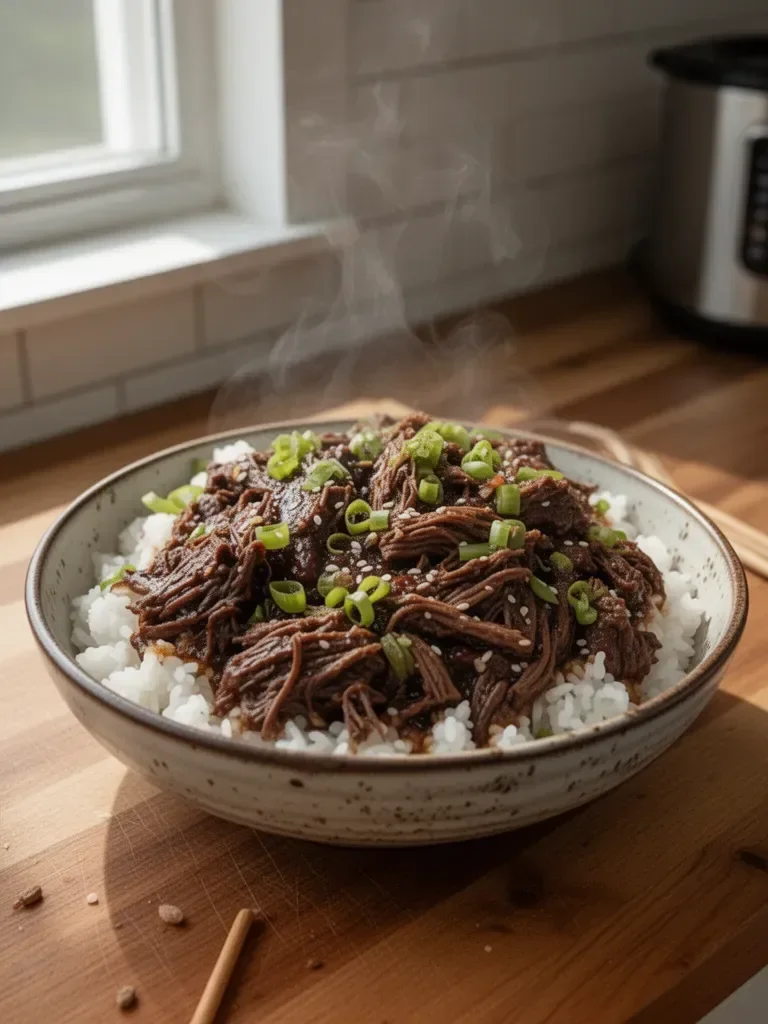
- Serve over rice and garnish with green onions and sesame seeds.
Mastering the Technique Behind Slow Cooker Korean Beef
Technique
Slow cooker Korean beef shines through a few essential cooking techniques. The first technique is properly seasoning your beef. A good sprinkle of salt and pepper ensures the meat has flavour from the inside out. Don’t skip this step—it sets the stage for a delicious dish.
Another critical technique involves ensuring that your sauce ingredients mix well before adding the meat. This step guarantees that every bite of beef is coated with flavour. When preparing the sauce, taste before adding the meat. Adjust the balance of saltiness and sweetness to suit your preferences.
Tips and Tricks
A few tips can enhance your slow cooker experience. For added depth, marinate the beef in soy sauce and spices for a few hours before cooking. This step enhances the flavour, making each forkful irresistible. Additionally, if you have time, sear the beef on all sides in a hot skillet before adding it to the slow cooker. Searing locks in moisture and contributes a rich, roasted flavour.
For those who enjoy a bit of heat, consider adding sliced red chillies or a dash of hot sauce to the sauce mixture. This small addition cultivates a delightful kick, bringing an exciting twist to your slow cooker Korean beef.
Perfecting Your Slow Cooker Korean Beef
Perfecting Results
Achieving perfect slow cooker Korean beef requires attention to detail. The right cooking time is crucial; avoiding overcooking keeps the beef juicy. If you’re unsure, check your beef after the recommended cooking time. It should shred easily with a fork—indicator of perfect tenderness.
After shredding the beef, mixing it back into the sauce allows each piece to absorb flavour. The glossy, sticky sauce clings beautifully to the meat, enhancing every bite. Serve it over fluffy rice for a complete meal.
Troubleshooting and Variations
If you find your sauce too salty, balance it by adding a splash of water or a hint of vinegar. Adjusting flavours to your taste ensures a satisfying meal for everyone. Another common issue is the beef being tough. Ensure that the cooking duration aligns with the cut of meat and that the slow cooker maintains a low and steady temperature.
Consider experimenting with variations. Add vegetables such as carrots or bell peppers for additional nutrition and colour. These can roast alongside the beef, soaking up the flavours of the sauce, resulting in a comforting meal that excites the palate.
Serving and Storing Your Slow Cooker Korean Beef
Serving and Presentation
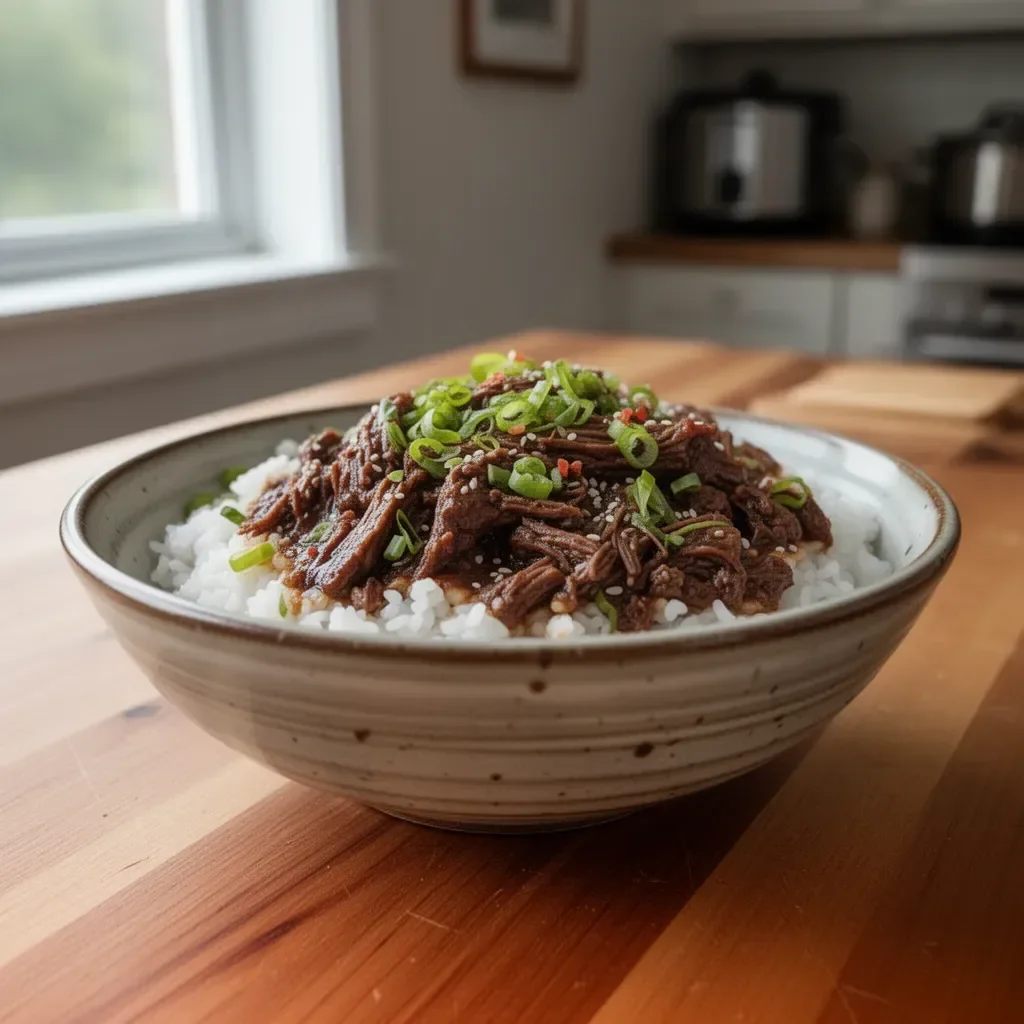
Presentation makes a difference when serving slow cooker Korean beef. Serve generous portions over a bed of rice and sprinkle with freshly sliced green onions and sesame seeds. The green onions add crunch, while the sesame seeds bring a pleasing visual appeal and nutty flavour.
Pair with steamed vegetables or a fresh salad to create balance in your meal. The contrasting textures and flavours make every dish harmonious, making your family meal more enjoyable.
Pairings and Storage
When it comes to side dishes, slow cooker Korean beef pairs beautifully with steamed bok choy, rice noodles, or even a refreshing cucumber salad. These options provide a refreshing crunch that complements the rich flavours of your beef.
Storing leftover slow cooker Korean beef is straightforward. Keep it in an airtight container in the refrigerator for up to three days. Reheat gently on the stovetop or microwave, adding a splash of water if needed to maintain moisture. For longer storage, freeze portions in freezer-safe containers for up to three months, ensuring you can enjoy it later.
Slow cooker Korean beef is a culinary delight that brings warmth and joy to any meal. Embrace the slow cooking method and let your kitchen fill with delightful aromas. With each bite, savour the delightful flavours and take a moment to reminisce about why meals matter.
Slow Cooker Korean Beef
Ingredients
Method
- In a slow cooker, combine the soy sauce, brown sugar, sesame oil, minced garlic, minced ginger, and beef broth. Mix well to ensure the sugar dissolves.
- Season the beef chuck roast with salt and pepper, then place it in the slow cooker, ensuring it’s fully immersed in the sauce.
- Cover and cook on low for 8-10 hours or high for 4-6 hours, until the beef is tender and easily shredded.
- Once cooked, shred the beef in the slow cooker and mix it back with the sauce.
- Serve the slow cooker Korean beef over rice and garnish with sliced green onions and sesame seeds.