
📑 Table of Contents ▶
- Sourdough Focaccia: The Fundamentals
- Fundamentals
- Preparation Setup
- Directions
- Sourdough Focaccia: Technique and Tips
- Technique
- Tips and Tricks
- Sourdough Focaccia: Perfecting Results
- Perfecting Results
- Troubleshooting and Variations
- Sourdough Focaccia: Serving and Storage
- Serving and Presentation
- Pairings and Storage
- Ingredients
- Method
Sourdough Focaccia
Welcome to Eatimi! I’m Olivia Hart — a home-cook who believes delicious food doesn’t need complicated techniques. Here I share easy everyday recipes, family meals, quick ideas for busy days and helpful kitchen tips to make cooking simple and fun. My goal is to help you feel confident in the kitchen and enjoy homemade food with joy, comfort and love. 💛
There’s something incredibly satisfying about making your own bread, especially when it comes to sourdough focaccia. Just the thought of pulling a golden, airy loaf from the oven fills the kitchen with warmth and familiarity. Growing up, baking with my family often meant delightful experiments, with focaccia being a cherished favourite.
Focaccia’s wonderful texture and flavour come together seamlessly with the help of sourdough starter. This tangy leaven not only lends depth but also makes the process easier. With just a few essential ingredients—such as all-purpose flour, olive oil, and water—you can create a soft yet crispy focaccia that will impress family and friends.
Whether you savour it fresh from the oven, use it for sandwiches, or soak it in flavourful olive oil, sourdough focaccia brings a comforting sense of home. Let’s dive into the art of crafting this delightful bread!
Sourdough Focaccia: The Fundamentals
Fundamentals
To master the art of sourdough focaccia, one must understand the basic elements that come together harmoniously. Sourdough focaccia represents simplicity fused with skill. The foundation lies in combining flour, an active sourdough starter, water, and a few other key ingredients.
The process begins with the dough. All-purpose flour serves as the main ingredient, providing structure and flavour. Your bubbly sourdough starter gives life to the dough, while the water hydrates the mixture, activating the yeast. Salt enhances flavour and strengthens the gluten, leading to that coveted chewy texture. Finally, olive oil enriches the dough, promoting softness and adding a delightful taste.
Preparation Setup
Before getting hands-on with the dough, set the stage. Gather your ingredients and tools. A large bowl will serve as your mixing vessel, and a damp cloth will help prevent the dough from drying out during its resting periods. Also, prepare a greased baking sheet for the final shaping of your focaccia.
Ensure your sourdough starter is active and bubbly. A well-fed starter will impart the best flavour and rise to your focaccia. As you mix and knead, feel the dough transform from shaggy into a cohesive ball. Embrace the process; it will be worth the wait!
Ingredients
- 2 cups all-purpose flour: This forms the base of your focaccia, contributing to the texture.
- 1 cup sourdough starter: Your starter must be active and bubbly for optimal rise and flavour.
- 3/4 cup water: Hydration is critical; it activates the starter and gluten.
- 1 teaspoon salt: Enhances flavour while supporting gluten strength.
- 2 tablespoons olive oil: This keeps the focaccia soft and adds depth.
- Coarse sea salt (for topping): A sprinkle on top introduces texture and contrast.
- Fresh herbs (optional, for topping): Enhance your focaccia with finishing touches of flavour.
Directions
- In a large bowl, mix together the flour, sourdough starter, water, salt, and 1 tablespoon of olive oil until a shaggy dough forms.
- Cover the bowl with a damp cloth and let it rest for about 30 minutes.
- After resting, stretch and fold the dough in the bowl for about 5 minutes.
- Transfer the dough to a greased baking sheet, then gently stretch it to fit the pan.
- Cover the dough again and let it rise at room temperature for 4 to 6 hours, or until it has doubled in size.
- Preheat your oven to 425°F (220°C).
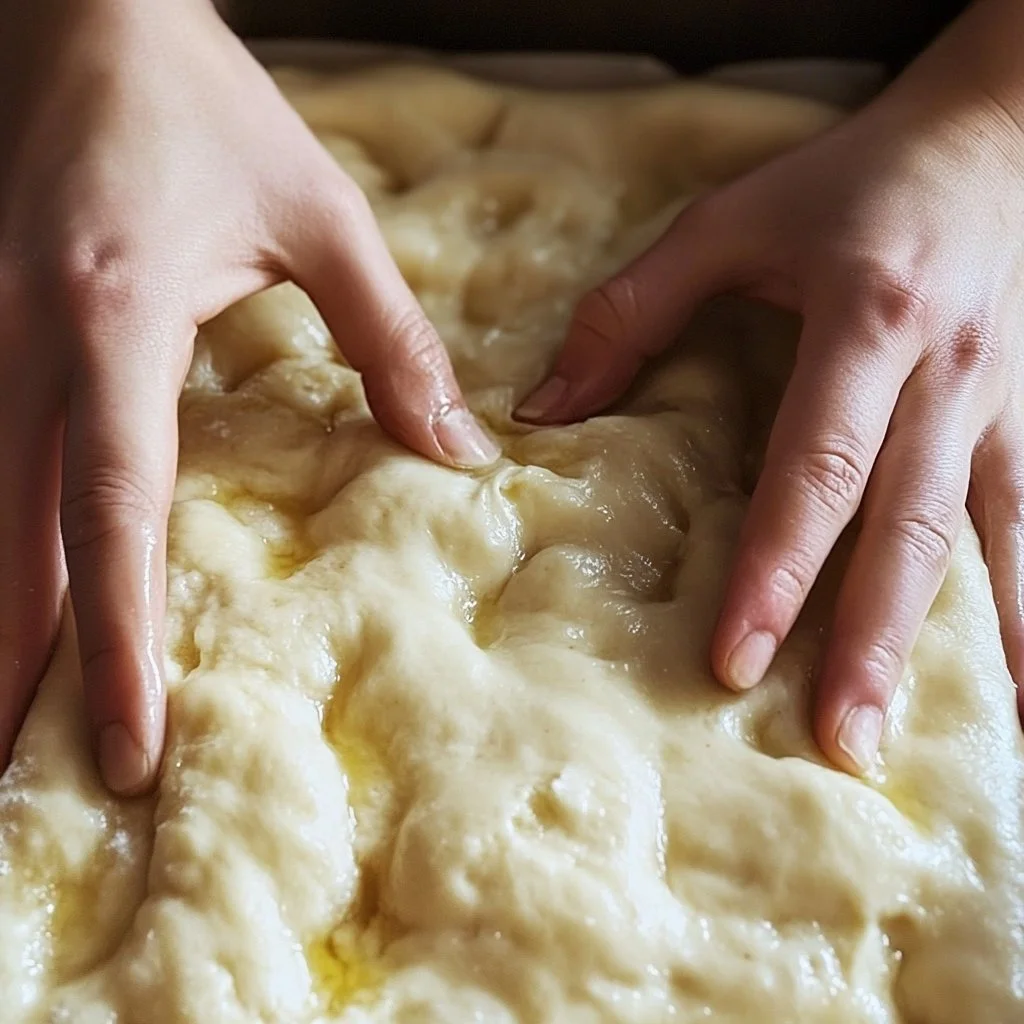
- Use your fingers to dimple the surface of the dough, then drizzle with the remaining olive oil and sprinkle coarse sea salt and optional herbs on top.
- Bake for 20-25 minutes, or until golden brown.
- Allow to cool slightly before slicing and serving.
Sourdough Focaccia: Technique and Tips
Technique
Getting the technique right is essential for perfecting sourdough focaccia. The stretching and folding method works wonders for gluten development. After letting the dough rest, use wet hands to stretch and fold it gently within the bowl. This process strengthens the gluten structure, helping the dough rise beautifully.
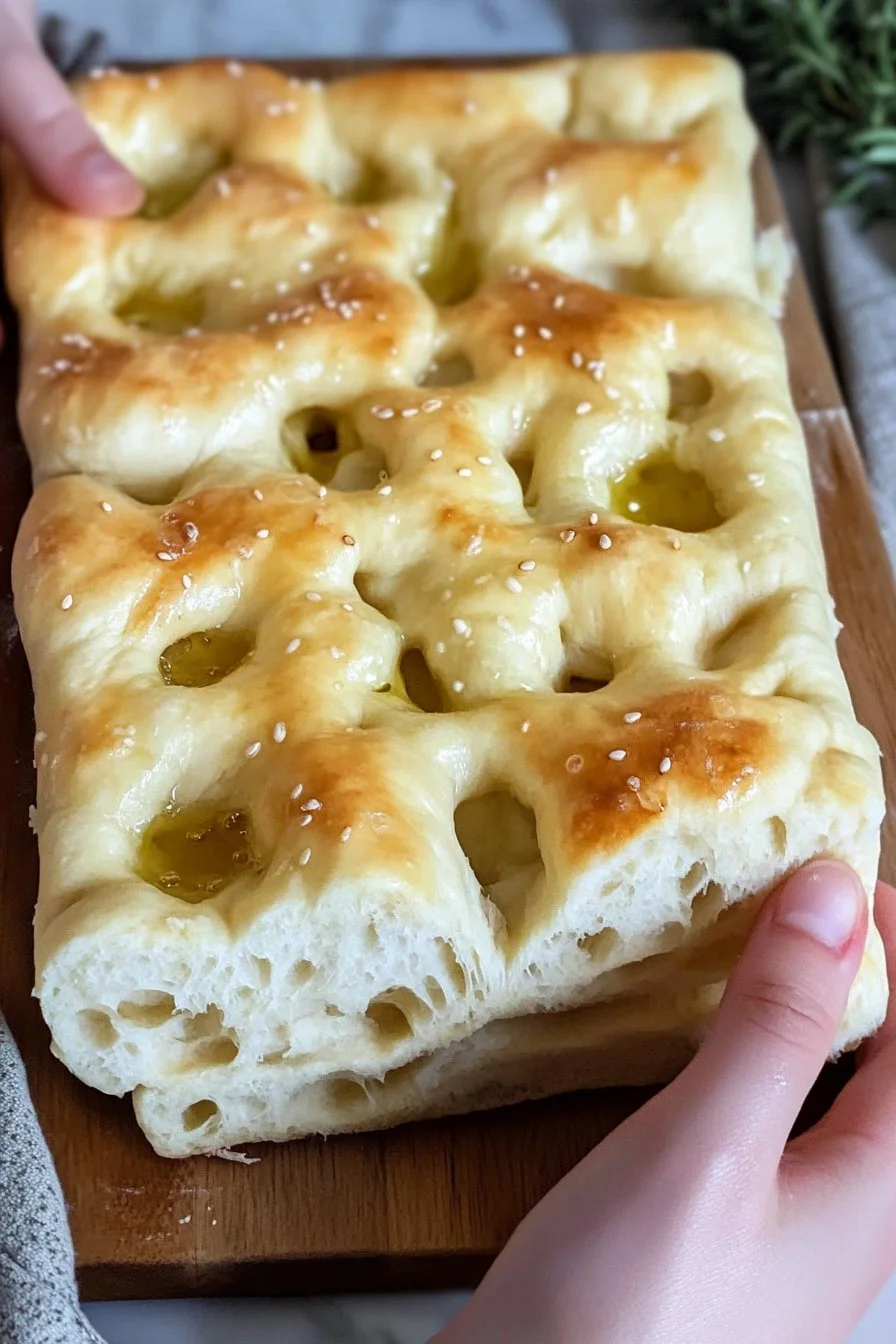
Shape the dough on the greased baking sheet, allowing your fingertips to dimple the surface. Those dimples create pockets that catch olive oil and toppings, ensuring every bite bursts with flavour. Patience always pays off in dough-making, so allow it to rise adequately before baking.
Tips and Tricks
To achieve that golden-brown exterior and soft interior, keep a few handy tips in mind. Make sure the oven is fully preheated before introducing the focaccia; this ensures immediate oven spring for a tall rise.
Experiment with toppings! Fresh herbs like rosemary or thyme can provide cheerful scents and tastes. For an extra kick, consider adding garlic or sun-dried tomatoes before baking. You can also enjoy this focaccia plain, relishing the flavour of the crust.
Maintain a careful balance between hydration and flour for the best results. Too much water can lead to a sticky dough, while too little might result in a dry loaf. Adjust as needed and learn how your ingredients respond during the process.
Sourdough Focaccia: Perfecting Results
Perfecting Results
Perfecting your sourdough focaccia takes practice and a few adjustments along the way. If your dough doesn’t rise as expected, ensure your starter is fresh and bubbly. Also, consider the temperature of your kitchen; dough rises faster in a warm environment.
Keep a close eye on the colour of your focaccia as it bakes. The exterior should turn a delightful golden brown, while the texture inside remains soft and airy. If you’re unsure, tap the bottom of the focaccia; it should sound hollow when fully done.
Troubleshooting and Variations
Encountering difficulties is part of the learning curve. If your focaccia feels dense, either your kneading or stretching may need more work. Focus on stretching the dough properly during the rise phase to incorporate air.
Variations can elevate your focaccia game. You might try different herbs or even experiment with olives, cheeses, or seasonal vegetables as toppings. Each variation creates a new taste experience, so don’t hesitate to get creative in the kitchen.
Sourdough Focaccia: Serving and Storage
Serving and Presentation
Slice your freshly baked sourdough focaccia into generous pieces and serve warm. A rustic platter can display this loaf beautifully, making it the star of any gathering. Drizzle high-quality olive oil on the side for dipping, and perhaps offer balsamic vinegar for a wonderful flavour combination.
You can serve focaccia as a welcoming appetizer or alongside soups and salads. It also works perfectly as a bread option for sandwiches, allowing its soft texture to shine.
Pairings and Storage
While sourdough focaccia pairs wonderfully with various spreads, avoid any mention of wine pairings here. Instead, consider wonderful dips like hummus or bruschetta. You can also accompany it with creamy cheeses or charcuterie for a delightful sharing platter.
For storage, allow the focaccia to cool completely before wrapping it in a clean kitchen towel or placing it in an airtight container. This method keeps it soft for about two to three days at room temperature. If you want to extend its life, consider freezing portions for future enjoyment.
Every bite of sourdough focaccia encapsulates comfort and home. The bubbling starter, the soft interior, and the crispy crust all come together beautifully. Enjoy making this joyful loaf and share it with those you hold dear.
Sourdough Focaccia
Ingredients
Method
- In a large bowl, mix together the flour, sourdough starter, water, salt, and 1 tablespoon of olive oil until a shaggy dough forms.
- Cover the bowl with a damp cloth and let it rest for about 30 minutes.
- After resting, stretch and fold the dough in the bowl for about 5 minutes.
- Transfer the dough to a greased baking sheet, then gently stretch it to fit the pan.
- Cover the dough again and let it rise at room temperature for 4 to 6 hours, or until it has doubled in size.
- Preheat your oven to 425°F (220°C).
- Use your fingers to dimple the surface of the dough, then drizzle with the remaining olive oil and sprinkle coarse sea salt and optional herbs on top.
- Bake for 20-25 minutes, or until golden brown.
- Allow to cool slightly before slicing and serving.